Our extraordinary terroir continues to reveal exceptional treasures.
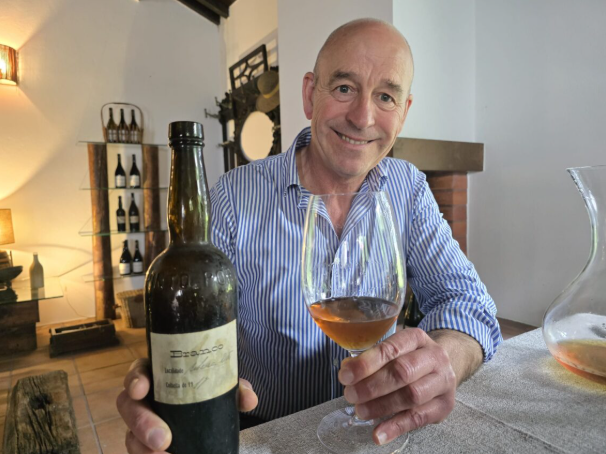
During a visit by some of the most distinguished wine journalists, another bottle from our collection of century-old wines was opened: a white wine from 1917.
It is worth remembering that this wine was made in the year of the Russian Revolution, which established Bolshevik rule, and the year the United States entered the First World War.
As with the other wines opened to date — the white wines from 1912, 1913, 1923, 1926, 1927, 1936, and the red wine from 1915 — this 1917 white was found to be in astonishing condition. There are no known records of still wines of such age anywhere in the world surviving in such good condition.
We share below some words from Maria João Almeida, a renowned journalist and President of the Portuguese Association of Wine Tourism.
“There are countries whose reputation for age-worthy white wines is firmly established, such as France and Germany. In these countries, time is an ally in achieving elegance and complexity. Yet we have such wines here in Portugal too, although they receive less attention, and the Dão is the region that reveals some of the most surprising examples.”
“It was precisely in the Dão that, this week, I tasted what is, to date, the oldest white wine from the region I have ever had the opportunity to taste. The vintage? 1917!”
“It was in the course of this story that I was fortunate enough — thanks to the generosity of the producer — to taste one of these wines that will remain in my memory forever. The 1917 white (from Ribeira Dão, according to the label) revealed on the nose the expected dried fruit and spice, together with intense notes reminiscent of Port wine. On the palate, it showed structure and present acidity, retaining a certain energy despite its venerable age.
The most extraordinary thing of all is how a white wine has managed to endure for so long. It is deeply moving to think that someone made this wine more than a hundred years ago, and that it has reached us today intact. It is a silent testimony connecting us to the past, revealing the remarkable longevity of Dão whites and a less visible chapter of Portuguese wine history — one that survives, forgotten, in cellars and old cupboards throughout the country.”
Our project began in 1990, and our first harvest was in 2004. Our wines have therefore not yet reached such venerable ages. However, their remarkable ageing potential, together with the condition of our older vintages, gives us reason to believe that they will be worthy successors to the extraordinary legacy we have inherited.
